
Lake County Previous Residents by Era
Previous-resident research depends on the period, not a single master list. Lake County recorded its first deed on April 16, 1840, but its web tools begin much later. Morley Library’s dated directories and census microfilm can add household evidence, while historic maps establish the place context. Read the source label closely: a deed identifies a recorded ownership transfer, a directory records a printed listing, a census records an enumeration-year household, and a map describes the ground at its own date.
| Source | Years it covers | Where held | What it can show |
|---|---|---|---|
| Recorder historical deeds | First deed April 16, 1840; books continue afterward | Lake County Recorder | Recorded ownership and land-instrument history |
| Recorder AVA and Laredo | Index from 1986; images from 1987 | Recorder web routes, registration, and counter | Later-era index and document trail |
| County historic atlases | 1857, 1874, 1898, 1915 | Lake County Tax Map and GIS | Landowner, road, and parcel geography by map year |
| Painesville directories | 1895, 1902, 1906, 1908, 1911, 1923, 1929, 1930 | Morley Library | Person-to-address listings; held street listings begin in 1923 |
| Haines Lake-Geauga criss-cross | 1976, 1977, 1981-1987, 1989, 1991 onward as held | Morley Library | Address-to-listed-occupant evidence |
| Federal census microfilm | 1840-1880 and 1900-1930 for Lake County | Morley Library | Household and neighborhood evidence for the census year |
| Sanborn maps | Painesville 1889, 1898, 1904 | Library of Congress | Building footprint, use, street form, and period geography |
Start with the current parcel when the address is known. Start with the most suitable directory or census year when a past household is known first. Then join the sources through the legal description, street form, and dates rather than by a name alone.
Lake County Address Starting Point
For past residents, the current Lake County Auditor property search is a starting record, not a conclusion. It connects a street address to a parcel ID, owner name, situs address, owner-mailing fields, sale date, and legal placement. Lake Navigator then helps place the parcel among surrounding lots and shows map context. Preserve the parcel ID, lot or tract wording, subdivision name, and legal description before opening the deed index.
A street number can change, overlap, or be carried differently in an old directory. The legal description is the steadier connection between an Auditor result, a recorded instrument, a plat, and a historic map. An owner of record, a tax mailing party, and a directory-listed person should remain separate labels throughout the Lake County trail.
Trace Lake County Deed Chain
The recorded chain moves backward from a current owner to earlier transfers. Keep the legal description beside each document, because it is the check that prevents a familiar name or similar street number from pulling the research onto another lot. The Recorder’s basic AVA search accepts party, date, document, address, parcel, subdivision, municipality, and tract fields. Laredo Select is the advanced route and requires registration and a password.
- Copy the current parcel’s legal description and owner name from the Auditor record.
- Search the current owner as a grantee in the Recorder index and locate the acquisition or transfer document tied to that legal description.
- Record the grantor, recording date, document type, document number, and book or page when present.
- Search that grantor as a grantee to find the earlier acquisition, again confirming the same legal description or plat reference.
- Repeat the backward search until the online coverage boundary is reached, then use the Recorder’s historical access channels for the earlier record.
- Grantor
- The person or entity transferring an interest in a recorded instrument.
- Grantee
- The person or entity receiving that interest. A prior grantor may become the next grantee search in a backward chain.
- Chain of title
- The sequence of recorded transfers connected to the same property, checked through each instrument’s legal description.
- Legal description
- The lot, tract, subdivision, or other property wording in a record. It is more stable than relying on a street number alone.
- Criss-cross directory
- A directory organized from an address to the listing printed for that volume, useful after the property trail has established the right street form.
Lake County Recorder Online Divide
The Recorder identifies its online index as beginning in 1986 and its online images as beginning in 1987. That boundary is a practical research tip: an absent early document in AVA is not evidence that the transfer never occurred. The office’s first county deed was recorded in 1840, and earlier research may also point to predecessor jurisdictions depending on the place and period. Do not fill a gap by guessing from a modern street number.
The Recorder’s search-document options provide the full fallback chain: AVA for basic information, registered Laredo for advanced search, in-person research at 105 Main Street, a mailed copy request with a check and self-addressed stamped envelope, and a public-record email request for a specific existing record. Documents unavailable online have a published $2-per-page hard-copy route.
The Recorder property-fraud alert is a separate notice service for potential document activity.
An alert is not proof of fraud or a substitute for reading the actual recorded document and confirming its property description.
Note: Record the access channel used with each result, especially when a counter copy fills an online-era gap.
Lake County Previous Residents Directories
Morley Library supplies the address-to-person layer needed after a property chain identifies the address form for a particular era. Its Painesville runs include 1895, 1902, 1906, 1908, 1911, 1923, 1929, and 1930. The library identifies 1923 as the first held Painesville directory with street addresses. Later Painesville-Mentor and area volumes extend through 1940, 1942, 1954, and 1961-1990 with listed later subscriptions. The Haines Lake-Geauga criss-cross books are especially useful because they invert the usual name-first arrangement.
Use the listing exactly as printed for its publication year. A first or last appearance can bracket a question, but a skipped volume does not prove a move or a change in who lived there. Morley’s access details and the collection runs are treated separately in the Lake County city directory collections; here, the directory is one dated layer in a backward address trail.
Morley’s city-directory inventory identifies the available runs. The Genealogy and Local History Room is on the second floor at 184 Phelps Street in Painesville and is appointment-only during normal library hours. A focused request can be sent to genealogy@morleylibrary.org or made by phone at 440-352-3383. Include the person, approximate year, place, and source type. Morley reports a typical three-to-five-business-day queue and does not promise a researcher for an unspecified former-resident question.
Lake County Census Pairing
A directory result gains meaning when it is checked against a census year and the same address or nearby geography. Morley has Lake County federal-census microfilm for 1840-1880 and 1900-1930. The 1890 population census was largely destroyed, and Morley’s Northeast Ohio 1890 Union Civil War Pensioners and Widows schedule is a limited local workaround, not a replacement household enumeration.
- Choose a directory closest to the year being investigated and copy its name spelling, initials, street number, street name, and publication year.
- Compare the street form with the parcel’s legal description and a period map before carrying the address into a census search.
- Consult the nearest available census microfilm year and record the enumeration date, household members, and the geographic context shown there.
- Use an obituary, probate record, cemetery entry, or another dated source only to narrow the time window, not to declare a current connection.
The process is address and year → directory entry → map check → census household → a dated endpoint source. Each arrow is a comparison, not an automatic identity match.
Lake County Map Context
Historic maps help explain the physical setting of an earlier address. Lake County Tax Map resources provide atlases from 1857, 1874, 1898, and 1915, plus old surveys, railroad valuation maps, and cemetery maps. The Library of Congress provides Painesville Sanborn editions for 1889, 1898, and 1904; the 1898 material includes Fairport and Richmond. These maps can reveal roads, period place names, lot patterns, landowner labels, building footprints, and uses.
A map does not identify every prior household or prove a title transfer. Use it to test whether a road, parcel, or building pattern fits the document trail, then rely on the Recorder for ownership and on the directory or census for a time-bounded household claim.
Lake County Archive Fallback
When the county index and library shelf do not close a gap, the Lake County Historical Society research library is the local house-history fallback. Its research library has ownership histories, old telephone directories, maps, local city histories, research staff, and an online catalog. It requires an advance appointment and preliminary topic statement. Remote research is published at $25 per hour, with scope and cost worth confirming before requesting a broader search.
Morley offers another offline path through its genealogy resources, obituary requests, and historical collections. The Recorder remains the custodian for recorded instruments, while the Historical Society and library can help bridge old maps, names, and address forms. Keeping those roles distinct produces a more defensible account of who lived here before.
Lake County Previous Resident Endpoints
Obituaries, death indexes, probate files, and marriage records can establish a dated endpoint or kin connection after a directory or census has identified the right person. Morley’s obituary index covers the Painesville Telegraph from 1822-1986 and the News-Herald from 1986-2019, with additional named newspapers. A request may be sent by email, phone, or mail with the full name, death date, publication date if known, and paper or electronic preference. Morley limits requests to four people and notes particular microfilm gaps.
The Ohio History Connection historical death-certificate search is a separate historical index route.
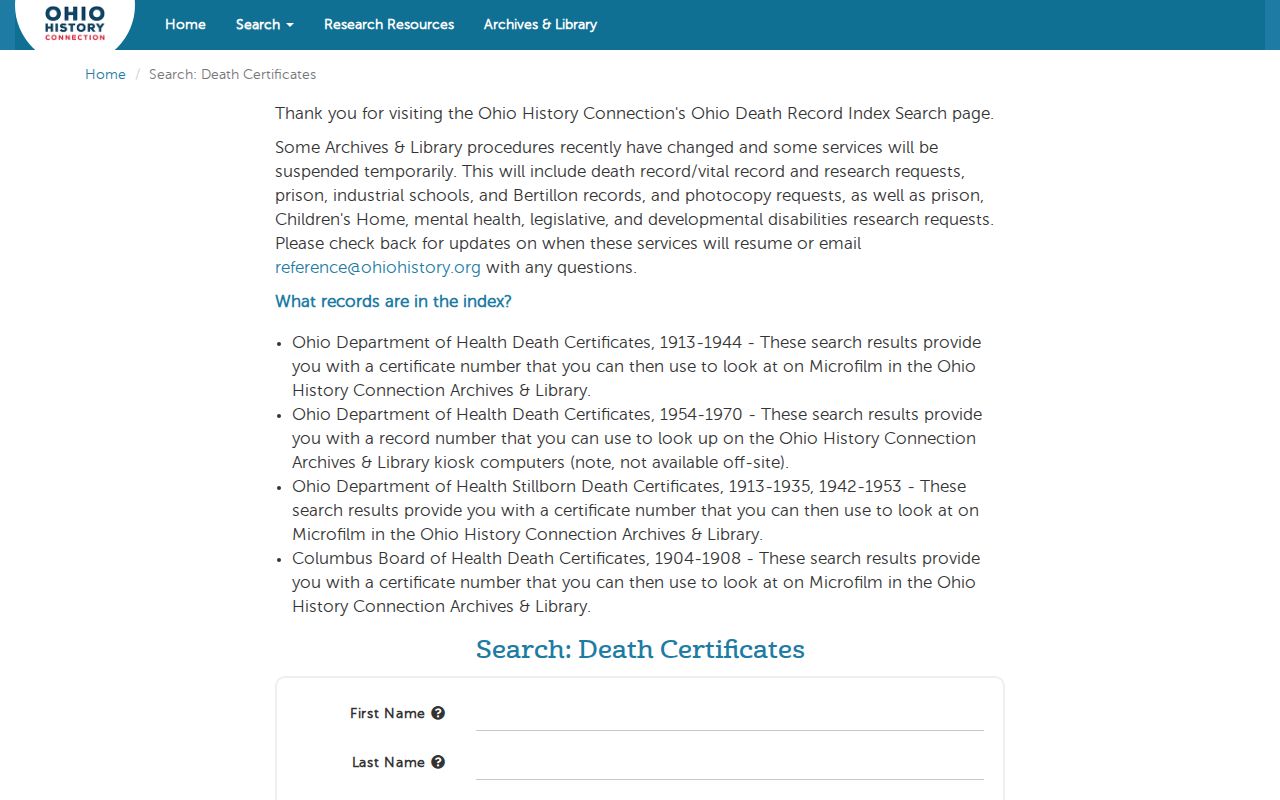
A death-index hit can support a dated research lead, but it does not by itself establish an address or the full household at that address.
For a marriage record within its custodial scope, the Lake County Probate Court marriage department provides the official route and points to historical material through FamilySearch where appropriate.
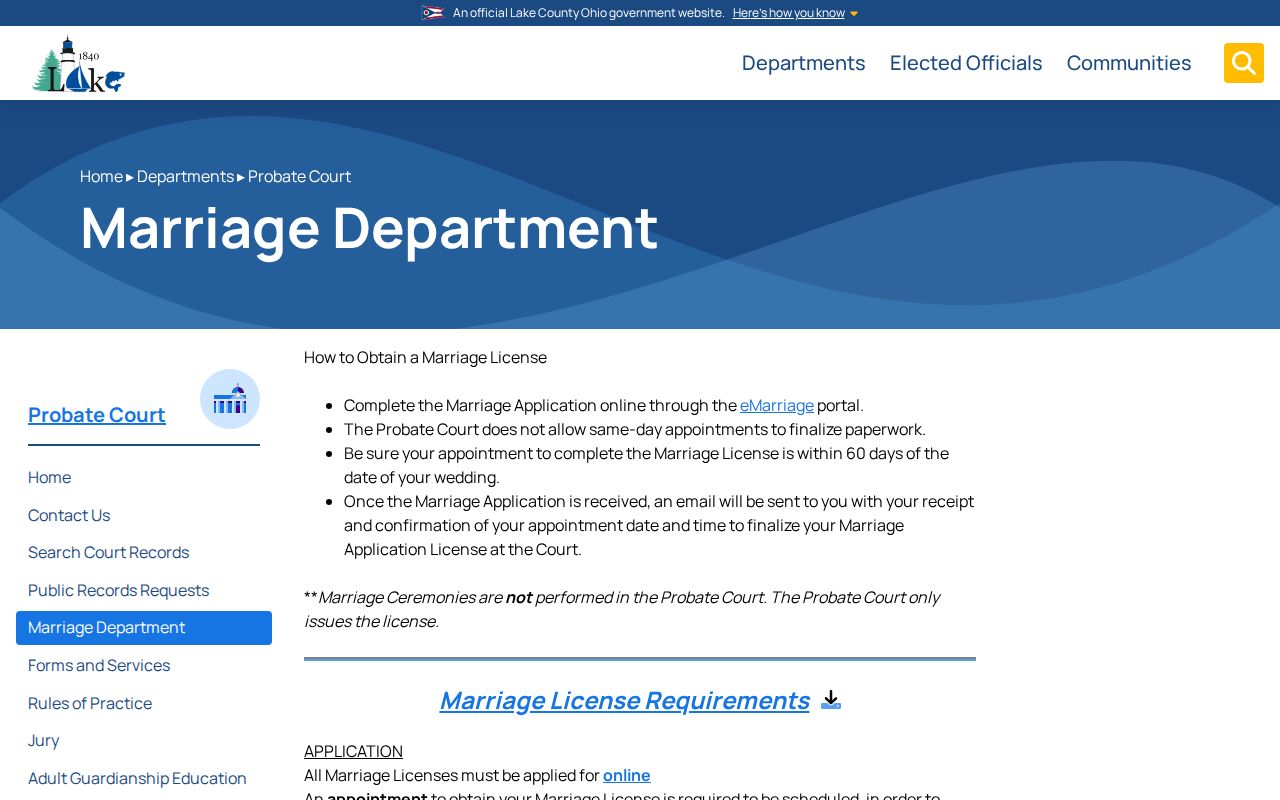
Marriage and probate records are separate from property records, so compare names, dates, and other evidence before treating them as part of one address history.
Lake County Previous Residents Limits
Public address records often cannot identify every past household member. No countywide open permit index was located, and Painesville Code Enforcement does not publish a public case index. A targeted request for an existing municipal record may provide limited address context, but it cannot replace a deed, dated directory, census, or archive source. Protected property displays and confidential registrations may also correctly limit what is visible.
House-history use. Use Lake County previous-resident research for family history, estate questions, property history, or personal curiosity. Never use a record trail to stalk, harass, track, intimidate, or harm a living person.